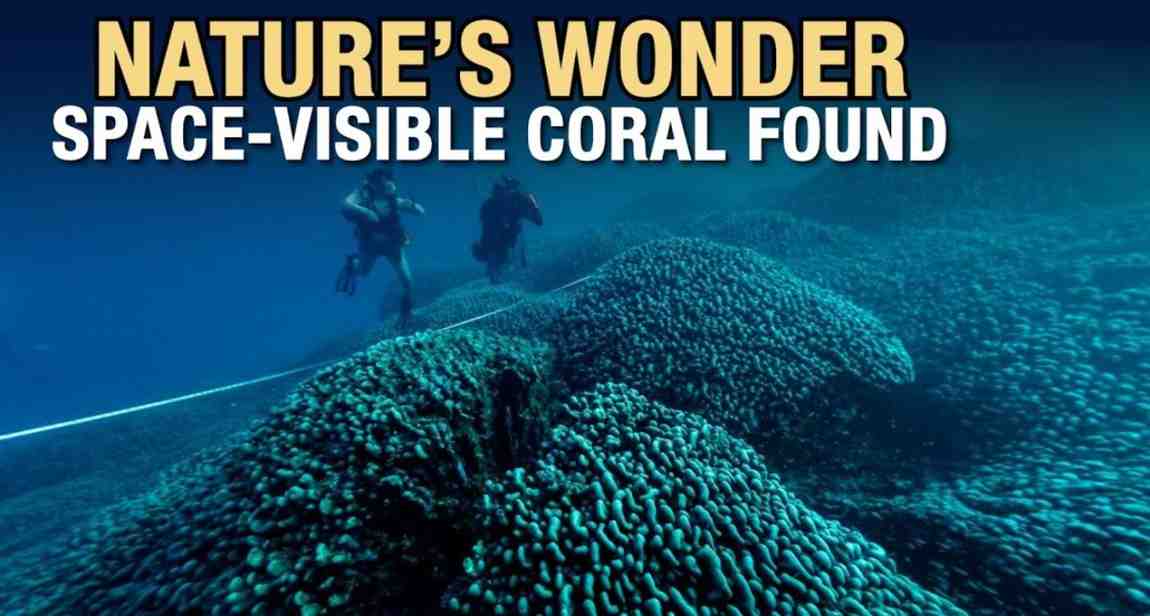

Recently, marine scientists discovered a massive, centuries-old black coral beneath the deep waters of Fiordland, New Zealand, and the discovery proved to be a major breakthrough. This discovery is shedding new light on some of the ocean’s oldest and least understood ecosystems. Let’s dive in with us to learn more about this discovery.
Where they found this giant black coral
The coral was discovered during a deep-sea research expedition conducted by a team from Victoria University of Wellington. Standing more than 13 feet tall and nearly 15 feet wide, researchers estimate the coral to be between 300 and 400 years old. It is the largest black coral ever recorded in New Zealand waters.
Scientific Importance
Marine biologist James Bell described the specimen as unusually large, noting that most black corals remain much smaller even at full maturity. Such ancient corals act as breeding and refuge zones for slow-growing deep-sea species. Their longevity indicates stable ocean conditions maintained over centuries, providing valuable evidence for long-term ocean health.
Conservation and Legal Protection
The discovery has important conservation implications. Mapping large coral colonies can help prevent damage from anchoring, fishing gear, and seabed disturbance. The coral is protected under the Wildlife Act, making it illegal to collect or harm it. Although termed “black coral,” it appears white when alive, as only its internal skeleton is black.
Important Facts for Exams
- Black corals are slow-growing organisms and can live for several centuries, making them highly vulnerable to disturbance.
- The largest recorded black coral was discovered in Fiordland, New Zealand.
- Such corals are protected under wildlife conservation laws, prohibiting collection or damage.
- Black corals provide shelter and breeding grounds for a wide range of deep-sea species, supporting marine biodiversity.
Ecological Role and Global Relevance
Black corals typically inhabit deep-sea environments and play a crucial role by providing habitat for diverse marine organisms. Historically, they have been used in jewellery and traditional medicine in some cultures. Their extremely slow growth and long lifespan make them especially vulnerable to disturbance, underscoring the need for careful mapping and protection of deep-sea ecosystems worldwide.


 By
By



 By
By


 By
By